
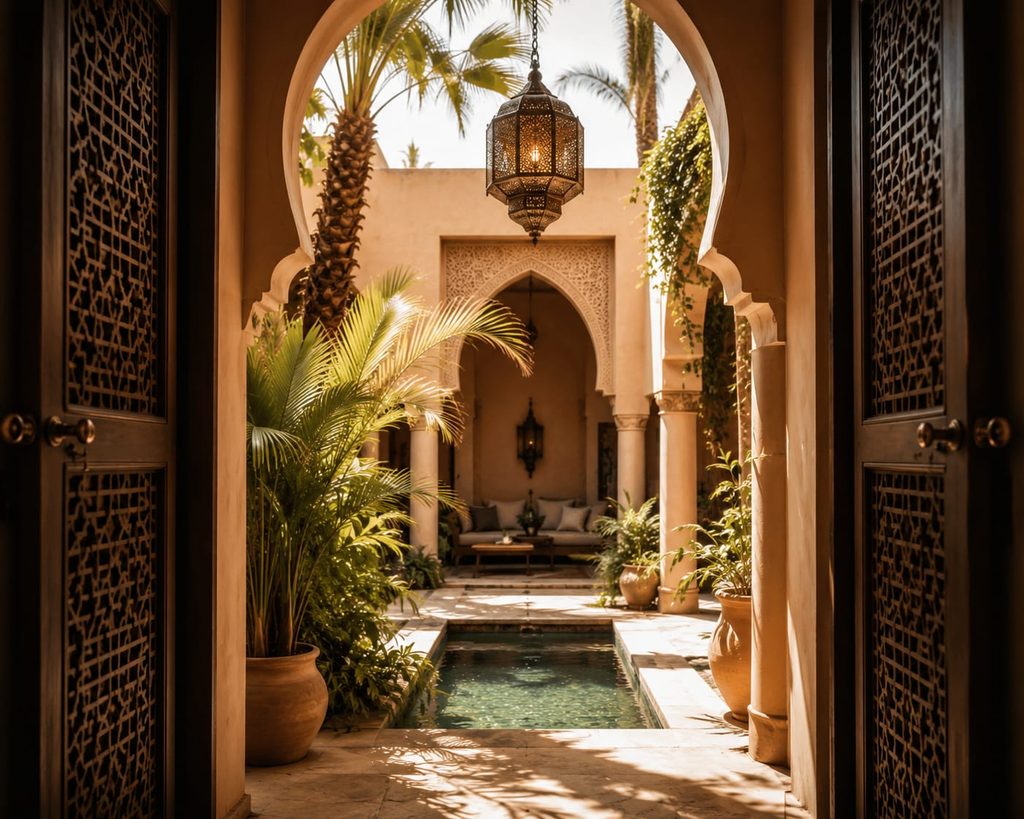
Heritage is not something that belongs only in museums.
It does not have to remain behind glass, preserved in archives, or limited to historical monuments. Heritage can live, evolve, and become part of contemporary life.
And hospitality has a unique opportunity to make that happen.
A historic building can become a boutique hotel while preserving the architectural character that makes it unique.
A traditional recipe can become part of a breakfast experience, introducing guests to flavors that have been passed down through generations.
A local craft can inspire furniture, textiles, lighting, ceramics, or decorative details throughout a property.
A traditional architectural element can be reinterpreted within a contemporary space, creating an environment that feels modern without losing its connection to place.
The challenge is not simply to include heritage.
The challenge is to integrate it with meaning.
From decoration to identity
There is an important difference between decorating a hotel with elements that look traditional and creating a hospitality experience that is genuinely connected to its destination.
A few Moroccan lamps, handmade carpets, or decorative ceramics may create a certain visual atmosphere.
But heritage goes much deeper than aesthetics.
It is about understanding where these objects come from.
Who made them?
Why were they created?
What role do they play in local culture?
When these questions become part of the design and guest experience, heritage stops being decoration.
It becomes identity.
And this is particularly powerful in boutique hospitality, where travelers increasingly look for properties with a sense of character and place.
Preserving heritage while creating something new
Preservation does not necessarily mean keeping everything exactly as it was.
In hospitality, giving heritage a new purpose can actually help ensure that it continues to live.
An old building that becomes a carefully restored boutique hotel can receive a new generation of visitors.
A traditional craft incorporated into contemporary design can create new demand for local artisans.
A traditional culinary practice introduced to international guests can generate renewed appreciation for regional cuisine.
A forgotten architectural detail can become a defining feature of a modern hospitality concept.
In this sense, hospitality can become more than an industry.
It can become a bridge between the past and the future.
The importance of balance
However, this process requires sensitivity.
There is a fine line between celebrating heritage and commercializing it superficially.
When cultural elements are used without understanding their meaning, the result can feel artificial.
The goal should be to create a property where heritage feels natural, relevant, and authentic.
That requires research.
It requires collaboration with local artisans, designers, architects, chefs, historians, and communities.
It requires understanding the destination before developing the concept.
And it requires making thoughtful decisions about what should be preserved, what can be reinterpreted, and what should remain untouched.
Heritage can become part of the guest journey
One of the most interesting opportunities lies in integrating heritage throughout the entire guest journey.
It can begin before arrival, through the story of the property and its location.
continue at reception, where architecture and materials introduce guests to the identity of the destination.
appear in the rooms through locally made textiles, furniture, ceramics, and craftsmanship.
It can continue at breakfast through regional products and traditional recipes.
It can extend to experiences outside the property through relationships with artisans, guides, cultural sites, markets, and local communities.
Even small details can contribute.
The result is a hospitality experience where the destination is not simply something guests visit outside the hotel.
The destination becomes part of the hotel itself.
A more meaningful model of boutique hospitality
At Locanda Boutique Collection, we believe boutique hospitality should be about more than beautiful spaces.
It should be about creating places with a story.
A property should have a reason to exist.
It should reflect something about its environment, its architecture, its people, or its culture.
When guests discover craftsmanship, architecture, food, and traditions through their stay, they are not simply consuming an experience.
They are discovering part of a culture.
And when that discovery is handled with respect, it can create something valuable for everyone involved.
Guests gain a deeper connection to the destination.
Local artisans gain visibility and opportunities.
Traditional knowledge can continue to be valued.
Properties gain a distinctive identity.
And destinations benefit from tourism that goes beyond standardized experiences.
Looking toward the future
The future of boutique hospitality should not require us to choose between heritage and modernity.
The most interesting properties may be the ones that understand how to bring both together.
They can offer contemporary comfort while respecting historic architecture.
provide modern service while celebrating traditional hospitality.
use innovative technology without losing human connection.
create sophisticated interiors while supporting local craftsmanship.
attract international travelers while remaining deeply connected to their destination.
Because modernity does not have to erase heritage.
And preserving heritage does not mean refusing to evolve.
The real opportunity is to create hospitality experiences where the past inspires the future.
At Locanda Boutique Collection, we believe the future of hospitality can be modern, distinctive, and deeply rooted in place.